Table of Contents
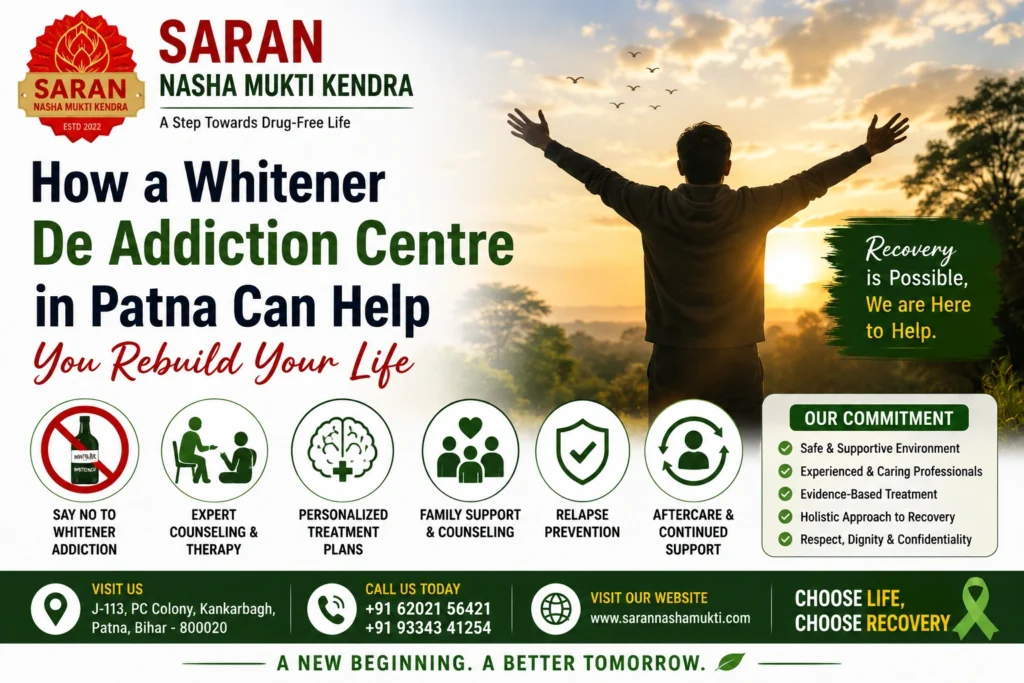
ToggleIf someone you love is caught up in whitener or inhalant use, you probably already know this isn’t just a phase they’ll grow out of. It creeps into everything, health, mood, relationships, school, work, even the small stuff like remembering to show up on time. A Whitener De Addiction Centre in Patna is built for exactly this moment, when things feel stuck and a person needs real, structured help to find their way back.
Good treatment isn’t about telling someone to “just stop.” It’s slower and more honest than that. It involves proper assessment, real counseling, safe withdrawal support, behavior-focused therapy, family conversations, and a plan for what happens after treatment ends. Put together, these pieces help someone actually understand why they started using and, more importantly, what to do instead.
Why a Whitener De Addiction Centre in Patna Matters for Recovery
Whitener and similar inhalants contain chemicals that give a quick high when the vapors are deliberately breathed in. It often starts with small curiosity, a dare, boredom on a weekend. But it doesn’t usually stay small. Repeated use wears down the body, clouds thinking, and puts a strain on relationships that can be hard to repair later.
A solid Whitener Addiction Treatment in Patna program looks at the whole person, not just the addiction. That means digging into what’s actually going on underneath, stress, loneliness, pressure from friends, whatever it is, and building coping tools that hold up over months and years, not just the first few weeks.
Understanding Whitener Addiction
No two stories look the same here. Some people start using it because of peer pressure or plain curiosity. Others fall into it during a rough patch and just never find a way out. And for some, it becomes a habit that quietly takes over before anyone notices.
One thing worth watching for: continued use even when it’s clearly causing problems, health issues, tension at home, slipping grades or missed work. That’s usually the point where a proper assessment at a de addiction centre in Patna becomes necessary rather than optional.
Whitener Addiction Treatment in Patna: Recognizing the Warning Signs
Catching this early makes a real difference. Often, it’s not the person themselves who notices first, it’s a parent, a teacher, a close friend, someone who sees the small changes add up.
Physical Warning Signs of Inhalant Abuse
Keep an eye out for a chemical smell on clothes or breath, frequent headaches, dizziness, nausea, clumsiness, slurred words, constant fatigue, or irritation around the nose and mouth. What exactly shows up depends on the substance, how often it’s used, and the person’s general health.
Some inhalants can cause real medical emergencies. If someone struggles to breathe, passes out, has a seizure, or becomes seriously confused after using, don’t wait around, get emergency help immediately.
Behavioral and Emotional Warning Signs
Mood swings, trouble focusing, slipping performance at school or work, pulling away from people, ignoring responsibilities, all of these can point to something deeper going on. A person might start hiding things, lose interest in stuff they used to enjoy, or keep making excuses to use again.
None of this deserves shame. It deserves a calm conversation and, ideally, a proper assessment at a Whitener Rehabilitation Centre in Patna. Confrontation and blame rarely get anyone anywhere.
Best Whitener Addiction Treatment in Patna: What Professional Care Involves
Recovery is about more than just quitting. It has to account for physical safety, emotional health, the person’s own circumstances, and the very real chance of relapse down the line.
Initial Assessment and Individualized Recovery Planning
Treatment usually kicks off with a detailed conversation about the person’s history, how long they’ve been using, how often, any past attempts to quit, current symptoms, physical and mental health, family situation. This isn’t just paperwork, it’s what shapes everything that follows.
From there, a recovery plan comes together. It might include counseling, behavioral therapy, supportive care, family involvement, lifestyle changes, and ongoing aftercare, whatever fits that particular person.
Support During Early Withdrawal
Stopping inhalant use after regular use isn’t always simple on the body or mind. Withdrawal can bring anxiety, irritability, bad sleep, headaches, nausea, tremors, low mood, or trouble concentrating.
WHO clinical guidance notes that inhalant withdrawal can show up within hours to a few days of stopping, and for some heavy users, it can even involve hallucinations or serious confusion. That’s exactly why monitoring and proper support matter so much here, trying to detox alone at home can be genuinely risky when dependence runs deep.
Whitener De Addiction Treatment in Patna and Behavioral Recovery
Stopping the substance is really just step one. The harder, more important work is understanding what led there in the first place and learning better ways to handle hard days.
Counseling for Inhalant Addiction
One-on-one counseling gives someone room to actually talk about cravings, stress, family tension, peer pressure, whatever’s weighing on them. A good counselor often spots patterns the person never noticed themselves.
Behavioral therapy builds on that with practical tools, ways to respond to triggers that don’t involve reaching for whitener every time life gets difficult.
Family Counseling and Support
Addiction never really affects just one person. It puts real pressure on the whole household. Parents, partners, siblings, they all end up carrying some of the worry, frustration, or fear.
Family counseling through a good Nasha Mukti Kendra Patna helps everyone understand what dependence actually looks like and how to talk about it without it turning into another fight. It also helps set healthy boundaries while keeping the door open for support.
How to Choose a Whitener Rehabilitation Centre in Patna
Don’t choose a rehab center off flashy ads or promises of an instant fix. Look for a program built on real assessment, qualified staff, careful monitoring, honest counseling, and follow-up care that doesn’t just stop the day treatment ends.
Important Features to Consider
When you’re comparing options for Whitener Addiction Treatment in Patna, check whether the center actually offers:
- Individual assessment and a personalized treatment plan
- Professional counseling
- Behavioral therapy
- Safe, supervised withdrawal management
- Family counseling
- Relapse prevention planning
- Guidance on building a healthier daily routine
- Follow-up care and aftercare support
- Referrals to medical specialists when needed
- A respectful, confidential space for recovery
The WHO and UNODC both stress that treatment for substance-use disorders should be evidence-based, ethical, personalized, and genuinely built around the person, not a generic checklist copied from somewhere else.
Rebuilding Life After Whitener Addiction in Patna
Recovery tends to stick better when someone actually fills the gap left behind with something better, instead of just removing the substance and leaving empty space where it used to be. That empty space is often exactly where cravings and boredom creep back in.
Creating Positive Daily Habits
A steady daily routine gives recovery something to hold onto. Regular sleep, decent meals, some exercise, meaningful work or study, hobbies, real relationships, all of it adds up over time.
It also helps to notice which places, people, or situations used to trigger use, and to consciously put some distance there wherever possible.
Relapse Prevention and Continuing Support
Finishing a rehab program isn’t really the finish line. Stress, family conflict, peer pressure, or a rough emotional stretch can resurface months, even years, later.
A solid relapse prevention plan helps someone recognize the early warning signs and know what to do before things spiral out of hand. Ongoing counseling and family support add extra accountability long after the initial treatment wraps up.
Why Early Whitener Addiction Treatment Can Be Important
Waiting too long lets these patterns settle deeper, and that usually means more damage to health, education, work, and relationships. Getting help early means dealing with the problem while it’s still manageable, not after it’s spiraled.
Families shouldn’t wait for every possible red flag before acting. If inhalant use is becoming frequent, hard to control, or already affecting someone’s health or behavior, reaching out to a professional de addiction centre in Patna is a reasonable step, not an overreaction.
Evidence-Based Information About Inhalant Dependence
Be wary of any center promising a guaranteed cure or an instant detox, recovery just doesn’t work like that. The WHO and UNODC both recommend treatment systems grounded in scientific evidence, ethical care, individual assessment, and proper psychosocial and medical support.
For more background, it’s worth reading through WHO’s guidance on drug-use disorders and withdrawal management before settling on a treatment path with a qualified healthcare professional.
Conclusion
Whitener or inhalant dependence touches a lot more than just physical health. It reaches into emotions, relationships, responsibilities, education, career, and whatever plans someone has for their future. A Whitener De Addiction Centre in Patna offers structured support through honest assessment, counseling, behavioral therapy, family involvement, safe withdrawal monitoring, and relapse prevention planning.
If you or someone close to you is looking into Whitener Addiction Treatment in Patna, choosing a professional, genuinely supportive program can be the turning point that breaks the cycle and helps rebuild everyday life. Saran Nasha Mukti Kendra offers personalized rehabilitation guidance for people working toward a healthier, drug-free future through a trusted Nasha Mukti Kendra Patna.
Frequently Asked Questions
1. What is a Whitener De Addiction Centre in Patna?
It’s a facility that offers structured support for people dealing with inhalant or whitener misuse. Depending on what the person needs, treatment can include assessment, counseling, behavioral support, family involvement, withdrawal monitoring, and relapse prevention.
2. What are the signs of whitener addiction?
Look for repeated inhalant use, strong urges to use again, failed attempts to quit, an unusual chemical smell, mood or behavior changes, slipping performance at work or school, pulling away from family, and continuing to use despite obvious consequences.
3. Is whitener addiction treatable?
Yes, it genuinely is. Inhalant-related substance-use problems respond well to professional assessment and the right psychosocial and supportive care. Every recovery plan should be shaped around the person’s own health, history, and circumstances.
4. Can inhalant withdrawal be dangerous?
It varies quite a bit from person to person. Some people get headaches, nausea, anxiety, poor sleep, irritability, tremors, or trouble focusing, while heavy users can face more serious symptoms. A professional assessment is a good idea whenever dependence is suspected.
5. How can family members help someone with whitener addiction?
They can push for professional treatment, keep conversations calm, skip the shame and blame, join counseling sessions when it makes sense, support healthy daily routines, and help limit exposure to situations tied to substance use. Steady, patient encouragement really does make a difference through recovery.