Table of Contents
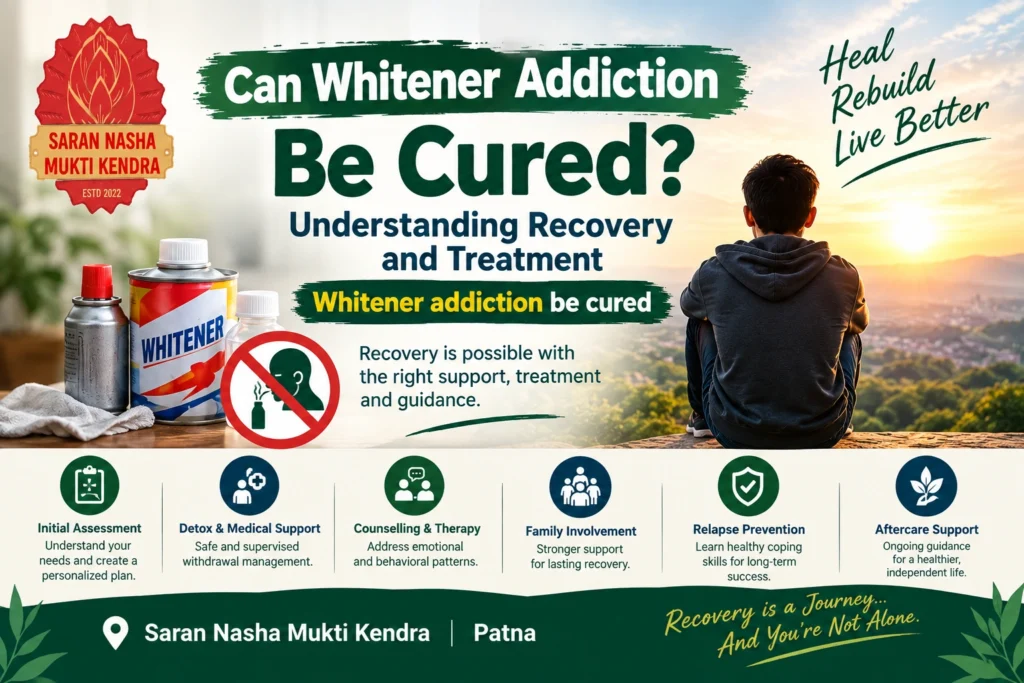
ToggleWhitener misuse can turn into a real problem, and it happens quietly at first. A person’s health starts slipping, their behaviour changes, relationships get strained, studies or work fall behind, and the everyday routine that used to feel normal just… doesn’t anymore. Products sold as whitener carry volatile chemicals, and breathing in those fumes on purpose does real damage, to the body and the mind both. What starts out as curiosity, or just going along with friends, can slowly turn into something that’s genuinely hard to walk away from. Understanding whether Whitener addiction be cured is possible can help individuals and families recognize that professional support and a structured recovery approach may be needed.
Most families land on the same question sooner or later: can this actually be fixed? Whitener addiction be cured isn’t something you can answer with a simple yes or no. It depends on how long the person’s been using, their overall health, how deep the dependence goes, what kind of home environment they’re in, and honestly, whether they’re even ready to accept help yet. But with the right assessment, proper inhalant addiction treatment, counselling, family support, and a plan that actually gets followed through, people do stop. They do rebuild. It happens more often than families expect.
Can Whitener Addiction Be Cured Completely?
The word “cured” sets up expectations that don’t quite match how addiction actually works. It’s not a simple problem with one fix. Biology plays a part, so does mental health, so does the environment someone grew up in or lives in right now. The World Health Organization is clear about this too, calling drug dependence a treatable health condition, not a character flaw, and one that needs proper, evidence based care rather than guesswork.
So maybe it’s more useful to think of recovery as something ongoing, not a single finish line you cross. The point isn’t just stopping the substance use. It’s figuring out why it started in the first place, learning to handle triggers when they show up, getting daily life back to something functional, and building habits that hold up over the long run.
Some people move through this steadily, almost surprisingly so. Others take longer, need more sessions, more support, especially if they’ve relapsed before or are dealing with other mental health struggles on top of it.
Whitener Addiction Treatment: What Does It Involve?
Professional Assessment and Individual Recovery Planning
Good treatment doesn’t start with a one size fits all programme, it starts with a real conversation. A qualified professional will usually ask about the product being used, how often, for how long, the method, cravings, past attempts to quit, physical symptoms, emotional state, and whether anything else is being used alongside it.
All of that decides what kind of support actually fits. A proper whitener addiction treatment plan might combine counselling, supervised recovery support, behavioural strategies, sessions with the family, and follow up care, shaped around that one person rather than pulled off a template.
Managing Withdrawal and Early Recovery
People who’ve used inhalants regularly can go through withdrawal once they stop. WHO guidance points to headaches, nausea, tremors, trouble sleeping, anxiety, irritability, poor concentration, and in some cases, hallucinations.
That’s a big part of why trying to handle serious dependence alone, without professional backing, can be risky. How much monitoring someone needs comes down to their symptoms and their overall health at the time.
There’s no one detox routine that fits every inhalant case. Clinical guidance keeps coming back to the same basics: safety first, real assessment, close monitoring, and care that adjusts as the person responds, not a fixed script.
Whitener De Addiction Centre in Patna: Role of Counselling
Understanding the Reasons Behind Repeated Use
Stopping the substance is only half the job. Counselling digs into what’s actually driving the repeated use in the first place, and that part matters just as much.
Someone might have started using whitener out of peer pressure, boredom, stress, emotional pain, or just wanting to escape uncomfortable feelings for a while. Over time, that behaviour gets tied to specific people, places, moods, or situations, often without the person even noticing it happening.
A properly structured counselling programme, whether at a whitener de addiction centre in Patna or anywhere else, helps pull those patterns into the open and works on building better ways to respond.
Behavioural Therapy and Coping Skills
Behavioral therapy is about real, usable skills. Handling cravings when they hit. Staying away from high risk situations. Managing stress without it spilling over. Making clearer decisions in the moment. Dealing with tough emotions without reaching for a substance.
It’s not about someone just telling you “don’t do it” and leaving it there. This kind of counselling helps a person actually understand their own behaviour and find alternatives that work in real, everyday life, not just on paper. This matters especially for younger people, whose substance use is often tangled up with school pressure, friend groups, or trouble at home.
Best Approach to Whitener Addiction Treatment in Patna
When families start looking for Whitener Addiction Treatment in Patna, it’s worth looking past anyone promising a quick fix. A programme worth trusting focuses on safety, proper assessment, professional guidance, counselling, family involvement where it fits, and planning for the long haul, not just getting through the first few weeks.
A few things worth checking before choosing a centre:
- Individual assessment before treatment even begins
- Qualified professionals and real clinical support
- Counselling and behavioural interventions
- Monitoring during early recovery, when it’s actually needed
- Family education and involvement
- A structured daily routine
- Relapse prevention planning
- Follow up and aftercare
- Respectful, confidential communication throughout
Every person’s situation looks a little different, and a good recovery programme should reflect that. Treatment should shift as the person progresses, not stay locked into some rigid formula that ignores how they’re actually doing.
How Family Support Helps in Whitener Addiction Recovery
Creating a Supportive Home Environment
Families go through their own version of stress when someone close to them starts struggling with substance use. Anger, fear, frustration, confusion, all of it is normal. But constant criticism or arguments rarely solve much, if anything.
Support tends to land better when it mixes encouragement with healthy boundaries. Relatives can learn to spot warning signs early, talk things through calmly instead of blowing up, avoid accidentally enabling the behaviour, and gently steer toward professional help rather than trying to fix everything themselves at home.
Rebuilding Trust Gradually
Substance use chips away at trust within a family, and that trust doesn’t just come back because someone’s stopped using. It takes longer than that.
Small, steady things, better communication, being reliable, owning up to mistakes, being honest, these add up slowly and rebuild confidence over time. Families should also know that a setback doesn’t wipe out all the progress made so far. Sometimes it just means the recovery plan needs another look, not that everything’s failed.
Can Whitener Addiction Be Cured Through Willpower Alone?
Why Professional Support Can Make a Difference
Willpower matters, sure, but dependence is more tangled than just deciding one day to stop. Repeated use gets wired into behavioural patterns, cravings, emotional triggers, and the environment someone’s surrounded by.
WHO is pretty direct about this: substance use disorders need comprehensive, health based treatment, not the assumption that it’s just a bad habit someone should be able to muscle through. Professional de addiction support gives people structure, accountability, and real tools to understand their own triggers and build coping skills that actually hold up when things get hard.
Lifestyle Changes After Whitener Addiction Treatment
Building a Healthier Routine
Recovery gets a lot easier to hold onto once daily life starts moving in a better direction.
Depending on what the person needs, that might look like:
- Keeping a consistent sleep schedule
- Eating regular, balanced meals
- Staying physically active
- Avoiding people or places tied to past substance use
- Picking up hobbies that actually build something
- Reconnecting with supportive family members
- Gradually easing back into school or work
- Sticking with counselling when it’s recommended
None of these replace professional treatment on their own. They support and reinforce whatever was already built during rehabilitation.
Relapse Prevention and Long-Term Recovery
Preparing for Triggers Before They Become Problems
A person can feel confident right after stopping, and then weeks or months later, run into a situation that brings the cravings right back. Stress, peer pressure, a rough emotional patch, or just being around old using environments, any of these can show up as warning signs.
Relapse prevention is about spotting those situations before they happen and having a real plan ready. That might mean calling a counsellor, talking to someone trusted in the family, leaving a risky environment on the spot, or reaching back out to professional support without waiting it out.
Long term recovery tends to hold up better when people understand that asking for help isn’t a failure. It’s actually one of the most responsible things they can do to protect the progress they’ve already made.
Finding a Nasha Mukti Kendra Patna for Professional Support
Families searching for a Nasha Mukti Kendra Patna should look for a centre offering structured counselling, an individual recovery plan, guidance for the whole family, and continued support, not just something focused on getting someone to stop for a few weeks and calling it done.
Saran Nasha Mukti Kendra is one option families can consider for structured help with substance use concerns, counselling, recovery planning, and rehabilitation support built around the individual, not a generic template.
The right treatment approach should always come from a proper assessment of that person’s actual circumstances. And if someone shows severe physical symptoms, confusion, hallucinations, breathing trouble, seizures, chest pain, or any other medical emergency after inhalant exposure, getting urgent medical help right away isn’t optional, it’s critical.
For reliable, evidence based information on substance use disorders, families can also check the World Health Organization’s treatment guidance and standards: World Health Organization (WHO) treatment guidance.
Conclusion
So, can whitener addiction be cured? Recovery is possible, but it’s not a quick fix, and it’s not something willpower alone usually solves. A structured approach has to deal with both the substance use itself and whatever’s been keeping that pattern going underneath it.
Assessment, professional monitoring where it’s needed, counselling, behavioural support, family involvement, healthier daily routines, and a real relapse prevention plan, all of it plays a part. The sooner someone gets the right support, the sooner the whole family can move from fear and uncertainty into something that actually looks like a workable plan.
Frequently Asked Questions
1. Can whitener addiction be cured?
Recovery from problematic whitener or inhalant use is genuinely possible. Treatment usually focuses on stopping harmful use, managing withdrawal safely when it’s needed, counselling, behavioural support, and long term relapse prevention.
2. What is Whitener Addiction Treatment in Patna?
It typically includes professional assessment, structured rehabilitation, counselling, behavioural support, family guidance, a personal recovery plan, and aftercare, shaped around what the individual actually needs.
3. What happens at a Whitener De Addiction Centre in Patna?
A rehabilitation programme usually starts with an assessment, then moves into structured support, counselling, healthy daily routines, behavioural strategies, family involvement, and ongoing recovery guidance.
4. Can whitener withdrawal be dangerous?
Withdrawal looks different from person to person. Some people get headaches, nausea, tremors, insomnia, anxiety, irritability, poor concentration, or hallucinations. A professional assessment matters a lot when dependence is significant.
5. How long does whitener addiction treatment take?
There’s no fixed timeline that works for everyone. It depends on the pattern of use, overall health, withdrawal symptoms, how recovery is progressing, and the type of support the person actually needs.