Table of Contents
ToggleAsk around in Patna and you’ll hear the same line again and again: “It’s just weed, it’s not like alcohol.” Plenty of families believe it. Yet regular use can quietly eat into sleep, focus, studies, work and the way people talk to each other at home. Marijuana de-addiction therapy in Patna exists for exactly this situation. It gives a person a clear plan, honest counselling and trained support while they work on cutting down or quitting.
Cannabis goes by many names, including ganja, charas and weed. Whatever people call it, it affects memory, mood, motivation and sleep. If someone keeps using it after it has started causing trouble, a professional assessment is a good next step. And if you’re a parent or partner reading this, knowing how cannabis addiction treatment really works will make those first conversations a lot easier.
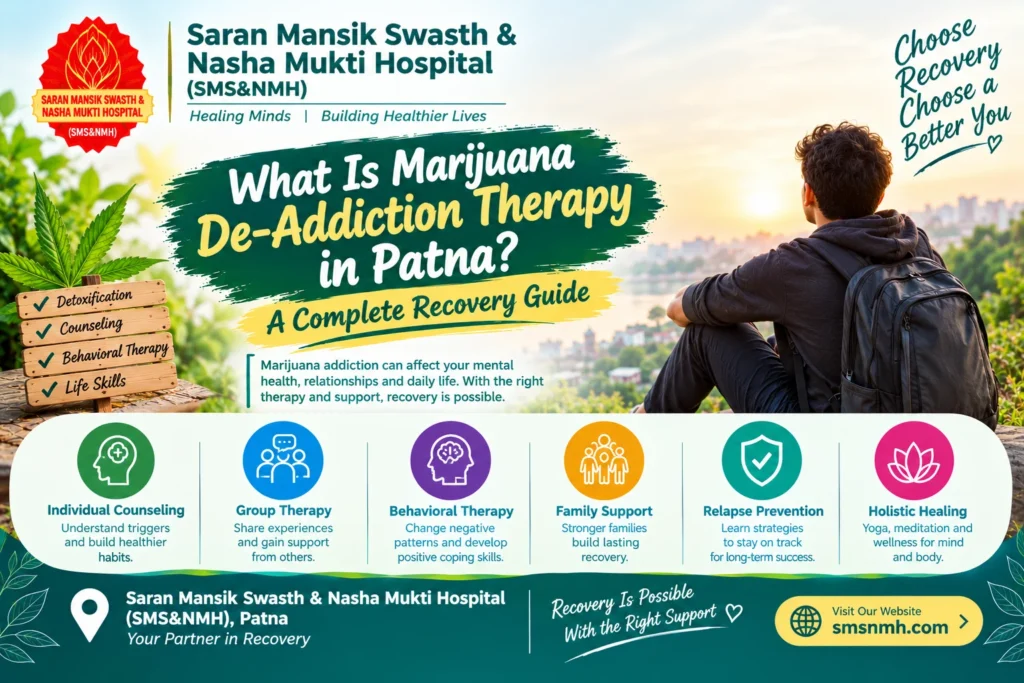
What Is Marijuana De-Addiction Therapy in Patna?
Think of marijuana de-addiction therapy in Patna as a guided plan, not a quick fix. The goal is to help someone reduce or stop cannabis use. Just as important, it looks at why the habit formed in the first place. Stress, boredom, low mood and friends can all play a part. So a good programme teaches people to read their triggers, steady their emotions, get through withdrawal and stay clear of relapse.
A professional marijuana rehabilitation centre in Patna usually covers these areas:
- A first assessment of cannabis use and general health.
- One-to-one counselling and behavioural therapy.
- Help with cravings and withdrawal discomfort.
- Family counselling and awareness sessions.
- Lifestyle planning and relapse prevention.
- Follow-up support once the main programme ends.
No two people need exactly the same plan. Age, how long and how often someone has used cannabis, mental health, physical condition and home situation all shape the right level of care.
How Does Marijuana Addiction Develop?
Cannabis contains psychoactive compounds, and THC is the best known. They act on the brain areas that handle mood, memory, attention and reward. Use it often enough and the brain starts to expect it. That’s especially true when someone reaches for marijuana to unwind, fall asleep or push stress away.
At first it feels like a choice. Later, many people notice they need more, or that they can’t stop even when they want to. Some carry on despite fights at home, falling marks, missed work or money trouble. Doctors call this marijuana addiction, and you’ll also hear people say weed addiction. It is more common than most families think.
Common Signs That a Person May Need Marijuana Rehabilitation
The earlier a family notices, the easier it is to step in.
Watch for these signs:
- Using more often, or more at a time, than planned.
- Promising to quit, then slipping back again and again.
- Spending a big part of the day getting, using or recovering from cannabis.
- Dropping hobbies, classes or daily responsibilities.
- Feeling edgy, anxious or sleepless when not using.
- Carrying on despite arguments with family or friends.
- Struggling to focus or keep a regular routine.
None of these signs proves addiction by itself. Even so, a qualified professional can look at the full picture and suggest what kind of help makes sense.
Types of Marijuana De-Addiction Therapy Used During Treatment
Recovery mostly rests on talking therapies and behavioural support. Which one fits depends on the person’s needs, motivation, mental health and the way they use cannabis.
1. Cognitive Behavioural Therapy (CBT)
Cognitive behavioural therapy helps a person see how thoughts, feelings and actions feed each other. Maybe someone lights up after a stressful day, when they’re bored or when friends are around. CBT helps them spot that pattern and try a different response.
Over a few sessions, a person may learn to:
- Recognise the moments that set off cravings.
- Question thoughts like “I can’t relax without it”.
- Deal with stress without a substance.
- Solve everyday problems step by step.
- Build routines that make good choices easier.
The best part is that these skills travel. They work at home, at college and in the office, long after the sessions end.
2. Motivational Enhancement Therapy (MET)
Plenty of people walk in unsure. They know cannabis is causing problems, but they aren’t convinced they want to stop. Motivational enhancement therapy meets them where they are. The counsellor asks open questions and helps the person find their own reasons to change, whether that’s a job, exams, a relationship or simply feeling better. There’s no lecture and no blame. People tend to stick with changes they have chosen themselves.
3. Family Counselling and Support
Cannabis dependence rarely stays one person’s problem. Arguments, secrecy and lost trust slowly build up at home. Family counselling gives everyone a calm space to talk and to be heard.
Relatives can learn how to:
- Speak without constant criticism.
- Notice situations that may push the person back to use.
- Offer support without covering up or enabling.
- Encourage the person to keep attending treatment.
- Back recovery routines once rehabilitation ends.
4. Behavioural Therapy and Relapse Prevention
Behavioral therapy helps people replace old habits with healthier ones. Relapse prevention goes a step further. It maps out risky situations ahead of time, so the person has a plan before a craving hits.
In real life, that might mean changing where friends meet up, fixing a late-night sleep routine or finding a new way to wind down. Regular counselling and follow-up visits help these changes hold.
What Happens During Marijuana Rehabilitation Treatment?
Treatment starts with an assessment, not a fixed timetable. During Marijuana rehabilitation Treatment Patna, the care team first learns about the person’s cannabis-use history, physical health, mental well-being, and support at home. Based on this assessment, they recommend suitable therapies and the next steps in the recovery process.
| Treatment stage | What it generally involves |
| Initial assessment | Understanding cannabis use, health history and personal needs |
| Treatment planning | Choosing suitable counselling and behavioural support |
| Withdrawal support | Watching for discomfort and giving appropriate guidance |
| Therapy sessions | Working through triggers, habits and emotional challenges |
| Family involvement | Improving communication and support at home |
| Aftercare | Follow-up guidance and relapse prevention |
How long it takes, and how intense it feels, differs from one person to the next. Some do well with outpatient counseling. Others need a more structured setting. A healthcare professional should guide that call.
What Are the Common Marijuana Withdrawal Symptoms?
After stopping or cutting back sharply, regular users may notice marijuana withdrawal symptoms. They vary from person to person and often fade with time. Still, the first couple of weeks can feel rough.
You may notice:
- Irritability, restlessness or mood swings.
- Anxiety or nervousness.
- Trouble falling asleep, or broken sleep.
- A smaller appetite.
- Headaches or sweating.
- Strong urges to use marijuana.
- Strange or vivid dreams.
Symptoms can start within a few days, and how long they last differs. With professional guidance, discomfort is easier to manage and other health issues get spotted early. However, severe anxiety, suicidal thoughts, hallucinations or other serious mental health symptoms need medical attention right away.
How to Choose a Marijuana Rehabilitation Centre in Patna
Choosing a centre is a big decision, so take your time. Look past slogans and ask what care is really on offer.
When you compare the best marijuana addiction treatment centre in Patna, ask about these points:
- Qualified professionals: Who are the doctors and counsellors, and how experienced are they?
- Individual treatment planning: Is the plan built around the person, or is it the same for everyone?
- Medical assessment: Can physical and mental health concerns be checked and referred on?
- Counselling support: Are there individual sessions, behavioural therapy and family involvement?
- Relapse prevention: Do follow-up and recovery planning come with the programme?
- Clear communication: Are the process, facilities, fees and expectations explained before admission?
If you’re searching for a marijuana rehabilitation centre in Patna, also ask how closely the person will be supervised. And always check services and clinical capabilities directly, rather than trusting a brochure.
How Saran Nasha Mukti Kendra Can Support the Recovery Journey
Getting professional help gives a family something solid to hold on to. At Saran Nasha Mukti Kendra, you can ask about the assessment process and the support options for marijuana de-addiction therapy in Patna and other substance-related concerns.
Before you decide, talk through the person’s cannabis history, earlier attempts to quit, physical health and emotional state. It’s also worth asking which services the centre provides, and whether medical or psychiatric referrals are possible when needed.
A trustworthy nasha mukti kendra in Patna will welcome questions, speak respectfully and plan around the individual. Families matter too. Steady encouragement at home, while trained staff lead treatment, often makes a real difference.
Why Aftercare Matters After Marijuana De-Addiction Therapy
Finishing marijuana de-addiction therapy in Patna feels great, and it should. But recovery doesn’t stop when the sessions do. Back in familiar places, old habits, friends and memories can pull a person toward past use.
A simple aftercare plan could include:
- Counselling and follow-up appointments on a set schedule.
- Regular sleep, exercise and meals.
- Keeping distance from people and places linked to cannabis.
- New hobbies and healthy friendships.
- Asking for help early when cravings or low moods return.
Recovery moves slowly. Steady support, realistic goals and quick action after a slip help people keep going.
Conclusion
Marijuana dependence can touch almost every part of life. The good news is that change is possible with the right help. Marijuana de-addiction therapy in Patna can bring together behavioural therapy, motivational support, family counselling, withdrawal guidance and aftercare, all shaped around the individual.
So start with a proper assessment, not guesswork or big promises. With honest information, suitable guidance and a supportive family, a healthier and steadier life is within reach.
For more on evidence-based care, take a look at the World Health Organization guidance on psychosocial interventions for cannabis dependence.
Frequently Asked Questions
1. What is marijuana de-addiction therapy?
Marijuana de-addiction therapy in Patna is a treatment approach that helps people deal with problematic cannabis use. It combines assessment, counselling, behavioural therapies and recovery planning.
2. Can marijuana addiction be treated?
Yes. Many people make real progress with professional support. Behavioral approaches such as CBT and motivational enhancement therapy are widely used, and the plan should always match the individual.
3. What therapies are used for marijuana addiction?
Common options include cognitive behavioural therapy, motivational enhancement therapy, family counselling and relapse prevention support. An assessment shows which of them may suit the person.
4. How long does marijuana rehabilitation take?
There is no fixed timeline. Length depends on how the person uses cannabis, their health, their psychological needs, their progress and the recommended level of care.
5. What are the symptoms of marijuana withdrawal?
Possible symptoms include irritability, anxiety, sleep problems, a smaller appetite, restlessness and cravings. Their strength and duration differ from person to person.