Table of Contents
ToggleMost families don’t walk into a clinic the day a problem starts. They wait, they hope it will pass, and they argue at home first. If that sounds familiar, you’re not alone. Drugs de-addiction Patna services exist for exactly this moment, and they usually bring together a proper medical check, counselling, behavioural therapy and regular follow-up. What goes into the plan depends on the drug and on the person.
Addiction doesn’t look the same in every home. One person is hooked on opioids, another can’t stop taking prescription pills, and some mix several substances without thinking about it. That’s why one fixed method rarely works. Once you know what each therapy actually does, choosing drug addiction treatment feels a lot less like guesswork.
What Is Drugs De-Addiction Treatment in Patna?
Put simply, it’s a planned way to help someone cut down or quit harmful drug use. Along the way they get through withdrawal symptoms, work out why the habit took hold and slowly build a steadier daily routine. The body and the mind both get attention, because treating only one rarely lasts.
A decent programme often covers these things:
- A medical and psychological assessment at the start.
- Detoxification under supervision, when the body needs it.
- One-to-one counselling and behavioural therapy.
- Medicines, but only when a doctor thinks they suit the person.
- Family counselling and some basic education for relatives.
- A written relapse prevention plan.
- Check-ups and support after the main treatment ends.
No two plans look identical. The doctor will consider which drug was used, how long and how often, past illnesses, mental health and any earlier attempts to quit. Only after that should a programme be suggested.
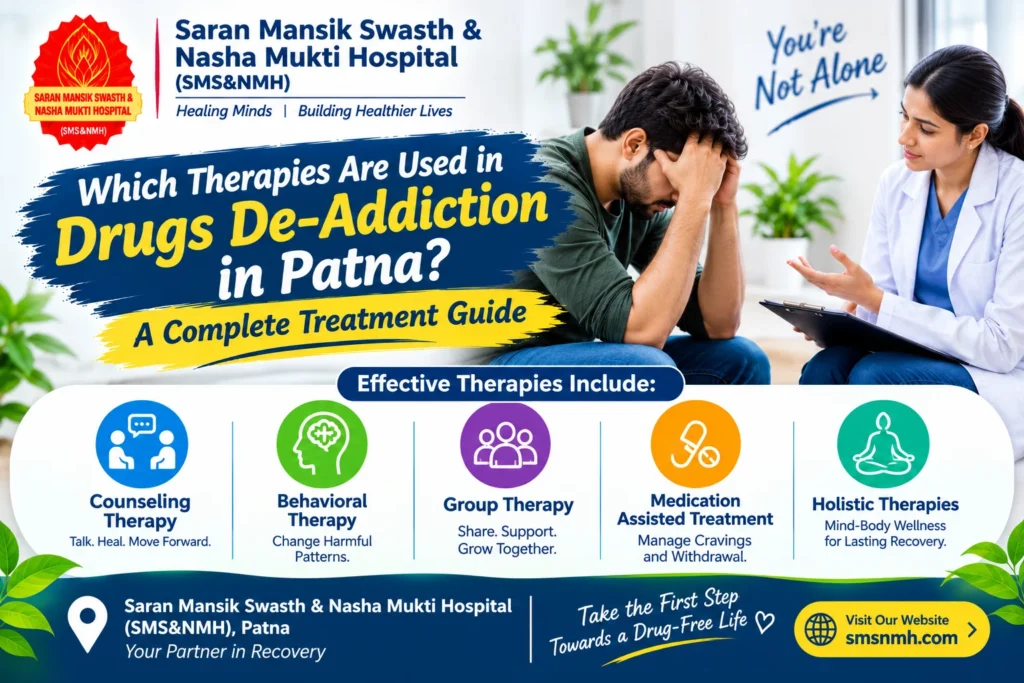
Which Therapies Are Used in Drugs De-Addiction in Patna?
Each therapy tackles a different side of the problem. A few help people understand their own thinking. Others build motivation, better communication and coping skills. And for some drugs, medical care simply can’t be skipped.
1. Cognitive Behavioural Therapy (CBT)
Cognitive Behavioural Therapy is a structured form of talk therapy. It shows how thoughts, feelings and actions push each other along. Think of someone who reaches for a drug every time they feel lonely, angry or stressed. CBT helps them catch that loop before it plays out.
Over a few sessions, people learn to spot those moments and try something different.
A therapist may help them to:
- Notice the thoughts that lead to drug use.
- Name their own triggers and risky situations.
- Practise easy ways to handle stress.
- Make calmer decisions and solve problems step by step.
- Build daily habits that protect their recovery.
CBT is common in drug rehabilitation for a good reason. The skills stay with you long after the sessions stop.
2. Motivational Enhancement Therapy (MET)
Sometimes a person knows drugs are hurting their life and still isn’t sure they want to quit. That mixed feeling is normal. Motivational Enhancement Therapy works with it instead of fighting it.
The therapist doesn’t lecture or push. The talk stays honest and centres on what the person wants, what worries them and why change might matter. Over time, many people start taking charge of their own treatment, and they’re far more likely to stay with it.
3. Contingency Management
Contingency management is simple at heart. Good steps earn small, planned rewards. Those steps might be turning up for counselling, joining group activities or hitting a goal that was agreed beforehand.
Why does it help? Because a behaviour that gets rewarded tends to be repeated. Some programmes fold it into a bigger plan, though whether it’s offered depends on the centre and on the person’s needs.
4. Individual Counselling and Psychotherapy
Behind many addictions sit old emotional wounds, relationship trouble, constant stress or other mental health problems. One-to-one counselling gives people a private, safe place to talk about all of that.
A trained counsellor can help someone see what surrounds their drug use, handle emotions more steadily and cope with hard days in healthier ways. It also covers self-confidence, worries at home and the tricky return to normal life.
5. Family Therapy and Counselling
Drug dependence almost never stays with one person. Parents, husbands, wives and children all feel it through arguments, money problems, broken trust and plain exhaustion.
Family counselling helps relatives see addiction as a health problem and not a lack of willpower.
Sessions often focus on:
- Talking to each other more openly.
- Understanding how addiction and recovery really work.
- Setting healthy boundaries.
- Spotting habits that quietly make drug use easier.
- Giving support without blame or threats.
When the family stays involved, home becomes a calmer place to get better.
Is Medical Treatment Required During Drug De-Addiction?
Quite often, yes. Medical help matters most when the body has become physically dependent, since withdrawal and health risks differ from drug to drug.
Take opioid withdrawal. It can bring muscle pain, sweating, nausea, loose motions, restlessness and sleepless nights. Sedatives like benzodiazepines are another matter, because stopping them can be dangerous and calls for careful medical supervision. Quitting certain drugs overnight without advice can put health at real risk.
Medicines can help in specific cases. Approved options exist for opioid use disorder, whereas stimulant addiction is handled mostly through behavioural therapy and support. Any medicine should be chosen by a qualified doctor, never by guesswork.
Common Stages of Drug De-Addiction Treatment
Most structured programmes follow a few stages. The exact order shifts depending on the person’s health and what recovery needs from them.
| Treatment stage | Main purpose |
| Initial assessment | Understand drug use, health history and treatment needs |
| Withdrawal management | Give medical support when it is required |
| Individual therapy | Work on emotional and behavioural factors |
| Family counselling | Improve communication and support at home |
| Recovery planning | Build healthier habits and coping strategies |
| Aftercare | Keep progress going through follow-up support |
What Happens During the Initial Assessment?
The first step is mostly listening. The care team wants to understand the person’s situation before fixing any schedule. Expect questions about which drug is used, how often, what earlier attempts to quit looked like, how the body and mind are coping and what support exists at home.
Those answers show possible risks and help decide the right level of care. If there are signs of severe withdrawal, overdose danger or serious mental health trouble, an urgent medical check may come first.
How to Choose a Drug De-Addiction Treatment Centre in Patna
Picking a de-addiction centre in Patna is a big call for any family, so it’s worth slowing down.
Keep these points in mind before you commit:
- Qualified professionals: Ask who the doctors and counsellors are and what experience they have.
- Individual assessment: The plan should fit the person’s drug history and health, not a template.
- Medical supervision: Find out how withdrawal problems and emergencies are handled.
- Therapy options: Check for individual counselling, behavioural therapy and family support.
- Privacy and dignity: Every patient deserves respect in a calm, supportive setting.
- Aftercare planning: Make sure follow-up guidance and relapse prevention are part of the deal.
- Clear information: Learn about services, how long the programme runs, facilities and fees up front.
When you look into drug de addiction treatment in Patna, ask each centre directly what it offers. Not every place provides the same medical or psychological care, and it’s better to find that out early.
How Saran Nasha Mukti Kendra Supports the Recovery Journey
The first step is often the hardest one. At Saran Nasha Mukti Kendra, people can ask about the assessment process and the addiction treatment options available.
Before you settle on a programme, talk openly about the person’s drug history, physical condition, emotional needs and past treatment. It also helps to check the team’s qualifications, how much medical supervision is on hand and whether a specialist referral can be arranged if needed.
A dependable nasha mukti kendra in Patna should encourage informed choices, personal guidance and respectful care. Treatment should be about the individual, not about promises of an instant cure.
Why Relapse Prevention and Aftercare Are Important
Finishing the first stage of treatment is a real achievement. Still, staying well takes ongoing effort. Going back to familiar streets and old friends can bring back habits, peer pressure and stress, all tied to earlier drug use.
A practical aftercare plan may include:
- Regular counselling and follow-up appointments.
- Keeping away from risky people and places.
- Sticking to healthy sleep, exercise and meal routines.
- Building friendships that support recovery.
- Learning what to do when cravings or low moods hit.
- Asking for professional help quickly if drug use returns.
A slip is a signal to review the plan. It doesn’t prove that treatment failed. With timely support, people can work out what happened and decide what to do next.
For trusted, research-based guidance, you can read theWorld Health Organization’s information on treatment and care for drug use disorders.
Conclusion
The therapies used in Drugs de-addiction Patna depend on the drug involved, the person’s health and what their recovery needs. CBT, motivational enhancement, contingency management, counselling, family support and medically supervised care can all help.
Reaching out early gives families time to understand their choices and plan the next step with expert advice. With the right approach, steady support and good aftercare, a healthier and calmer life is within reach.
Frequently Asked Questions
1. Which therapy is best for drug addiction?
There isn’t one that suits everybody. CBT, motivational enhancement, contingency management and individual counselling may all be suggested, depending on the person’s drug use pattern and what they need.
2. Can drug addiction be treated without medication?
Some people do well with behavioural therapy and counselling alone. Others have disorders that need medical treatment, so a qualified professional should decide which route fits.
3. How long does drug de-addiction treatment take?
It varies with the drug, how severe the dependence is, the person’s health and how they progress. A few people need only a short period of structured care, while many gain from longer follow-up.
4. What happens during drug withdrawal?
It depends on the drug. Common signs include anxiety, sweating, poor sleep, nausea, body aches, restlessness and mood swings. Some withdrawal can be dangerous, so take medical advice before stopping.
5. Is family counselling important during addiction treatment?
Yes. It improves communication, helps relatives understand addiction and makes home a more supportive place for recovery.