Table of Contents
ToggleWatching someone you love struggle with cocaine is exhausting. Confusing too, and honestly, more than a little frightening. If you’ve ended up here because you’re trying to understand What Is Cocaine De-Addiction, you’ve probably already seen firsthand how this drug can take over a person’s life without much warning. It’s rarely just about the body. It eats away at emotional well-being, strains relationships, drains money, disrupts work, and somehow makes even small daily decisions feel harder than they should. What starts as “just occasional” or “recreational” use can, before anyone really notices, turn into repeated use, sharp cravings, and a genuine inability to stop, even when the person can see exactly what it’s costing them. For families going through this, understanding the recovery process can be the first real step toward helping someone come out the other side.
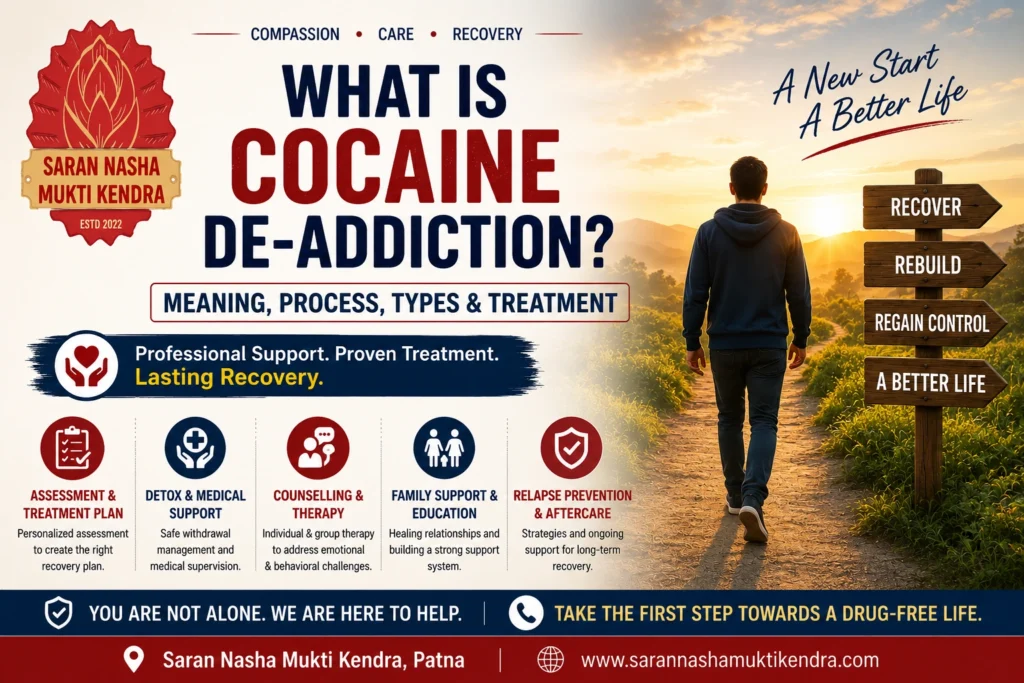
Real addiction treatment care is never just “stop using cocaine and move on.” There’s usually a proper assessment first, medical support where it’s needed, one-on-one counselling, behavioral therapy, family involvement, a workable relapse-prevention plan, and continued support once the main programme wraps up. Getting a rough sense of what these stages look like tends to make the whole thing feel less overwhelming, and it can help families reach out at the right time instead of waiting for things to get worse.
What Is Cocaine De-Addiction?
What Is Cocaine De-Addiction is usually the first thing people search once they start trying to make sense of cocaine dependence and what help is actually out there. Put simply, cocaine de-addiction is a structured process built to help someone stop using cocaine in a harmful way, and just as importantly, learn better ways to handle cravings, stress, hard emotions, and the everyday grind of life.
Cocaine is a powerful stimulant. It works directly on the brain’s reward system, and the more it gets used, the tighter that cycle of craving and continued use becomes. Plenty of people going through this talk about intense urges to use again, mood swings, disturbed sleep, anxiety, and just not being able to keep up with normal responsibilities anymore.
A properly run treatment programme doesn’t try to separate the physical, psychological, and behavioral sides of all this. It treats them together, because substance use is almost never just a matter of willpower, no matter how often people say it is.
Why Cocaine Dependence Can Be Difficult to Overcome
Here’s the tricky part about cocaine. It creates a cycle almost by design. A quick burst of stimulation or pleasure, then an emotional or physical crash not long after. That swing back and forth is often exactly what pulls people toward using it again, like chasing that first high over and over.
Give it enough time, and a person’s whole routine starts bending around getting or using the drug. Relationships get strained, work suffers, money or legal troubles start piling up fast. This is usually when families start seriously looking for a dependable Nasha Mukti Kendra Patna, instead of trying to white-knuckle it alone.
Professional treatment brings some order to what otherwise feels like chaos, and it helps people actually understand what’s driving their continued use, rather than just fighting symptoms one at a time and hoping something sticks.
What Is Cocaine De-Addiction Treatment? How Does the Process Work?
There’s no single plan that works the same way for everyone here. A good programme is shaped around the individual, taking into account their pattern of use, physical health, mental health, family situation, and what they personally want out of recovery.
Initial Assessment and Treatment Planning
The first step usually means building a clear picture of someone’s history with cocaine, plus their overall condition. Professionals will typically ask how often the person uses, how long the dependence has gone on, whether other substances are involved, any earlier attempts at quitting, sleep and mood patterns, medical concerns, and what’s going on at home.
That assessment helps decide what level of care actually fits. Some people do better in a structured residential setting, others manage fine with outpatient counselling or more specialised medical and psychological support.
Withdrawal Support and Early Recovery
Once someone stops using cocaine, they might deal with fatigue, low mood, a bigger appetite, changed sleep, irritability, anxiety, restlessness, or strong cravings. How rough it gets, and how long it lasts, really comes down to the individual.
Cocaine withdrawal usually looks different from coming off alcohol or certain sedatives, but that doesn’t make professional supervision any less important. When other substances or mental-health concerns are part of the picture, the level of support needed can shift a fair bit.
During this stage, treatment is mostly about keeping the person safe, offering real emotional support, staying alert for any complications, and helping them stay engaged with recovery instead of walking away too soon.
Cocaine Addiction Treatment Patna: Role of Counselling
When people ask about Cocaine Addiction Treatment Patna, counselling is usually where the real work happens. Stopping cocaine use doesn’t automatically erase the thoughts, situations, or emotional struggles that got someone there in the first place.
Individual Counselling for Cocaine Recovery
One-to-one counselling gives someone room to talk honestly about what they’re actually dealing with, somewhere that feels private and free of judgment. These sessions often get into stress, emotional triggers, relationship troubles, peer pressure, unhealthy habits, and past experiences tied to substance use.
A good counsellor helps someone spot the specific situations that raise their risk of using cocaine again, then works with them on building different responses. The whole point is coping skills that hold up in real life, not just inside a therapy room.
Behavioral Therapy and Craving Management
Behavioral therapy helps people notice the patterns tied to their substance use and, bit by bit, swap them for healthier ones.
Someone might learn to catch the early signs of a craving before it takes over, avoid high-risk situations before they even start, push back against unhelpful thoughts, and reach out to supportive people when the second things get difficult.
These skills matter even more once a person leaves a structured facility and has to put everything they’ve learned into practice without the same daily supervision backing them up.
Best Cocaine De Addiction Treatment in Patna: What Should You Look For?
Families searching for the Best Cocaine De Addiction Treatment in Patna should look past the marketing and actually dig into the quality of care a centre provides.
Important Features of a Suitable Recovery Programme
A responsible rehabilitation centre explains its approach clearly and doesn’t promise quick fixes it can’t deliver. Here’s what’s genuinely worth checking before deciding on one:
| Treatment Factor | Why It Matters |
| Professional assessment | Helps identify individual recovery needs |
| Medical evaluation | Identifies health concerns and appropriate care |
| Individual counselling | Addresses personal triggers and emotional challenges |
| Behavioral support | Helps change harmful patterns |
| Family counselling | Improves understanding and communication |
| Structured routine | Encourages stability and healthy habits |
| Relapse prevention | Prepares individuals for high-risk situations |
| Aftercare | Supports recovery after formal treatment |
Also worth asking about, plainly: staff qualifications, how emergencies get handled, counselling schedules, how well the centre keeps families in the loop, and what happens once formal treatment actually ends.
Cocaine De Addiction Treatment in Patna and Family Support
Addiction almost never touches just one person. It puts pressure on the whole household. Parents can feel completely powerless, spouses may find it hard to trust again, and other family members often can’t wrap their heads around why someone keeps using cocaine when the consequences are so obvious to everyone else.
How Families Can Encourage Recovery
Supporting someone through this doesn’t mean looking the other way. Families can push for treatment while still holding on to reasonable boundaries of their own.
Calm, steady conversation almost always beats blame or shouting matches. Family counselling helps relatives understand what dependence actually involves, notice their own enabling habits, and find better ways to offer support that actually helps.
Loved ones can also pitch in with small, practical things, like showing up for appointments, keeping healthy routines going at home, and helping the person stay away from old environments tied to substance use.
Types of Support Used During Cocaine Recovery
Depending on the situation, treatment might draw on a few different kinds of support at once, not just one.
Residential Rehabilitation
Residential care offers a structured setting where someone can put their full focus on recovery, away from a lot of the everyday triggers waiting for them at home. A typical programme mixes counselling, group activities, healthy routines, recreational time, and education around recovery itself.
This setup tends to suit people who need more structure, or who’ve already tried and struggled to stay on track on their own.
Outpatient and Continuing Counselling
Some people continue their treatment through scheduled counselling and regular follow-ups after finishing a more intensive programme.
That kind of ongoing support gets especially useful when new challenges show up, whether that’s returning to work, picking family responsibilities back up, or just easing back into normal social life again.
Relapse-Prevention Planning
Relapse prevention is arguably one of the most important pieces of long-term recovery. It means spotting personal triggers well before they show up, and having a real plan ready for the moment a hard situation actually arrives.
Common strategies: staying away from high-risk environments, building healthy daily habits, staying close to supportive relationships, finding better ways to manage stress, and reaching out for professional help the moment cravings start feeling hard to handle.
What Happens After Cocaine Rehabilitation?
Finishing a rehabilitation programme is a genuine milestone, sure, but recovery doesn’t just stop the day someone walks out the door. Going back to familiar surroundings often means running into old routines, social pressure, and emotional triggers all over again.
Building a Stable Lifestyle After Treatment
A healthy day-to-day lifestyle does a lot of the heavy lifting in keeping recovery on track. Regular sleep, decent nutrition, staying active, meaningful work, hobbies, positive relationships, all of it adds up to the kind of structure that supports lasting stability.
It also helps to keep recovery goals realistic. Small, steady improvements usually build more lasting confidence than chasing big, dramatic changes.
Recognizing Early Warning Signs
Certain shifts deserve attention early on: pulling away from people, drifting back toward old drug-using circles, skipping counseling sessions, intense cravings, disrupted sleep, or noticeable emotional distress. Any of these can be a sign extra support is needed again, sooner rather than later.
Reaching out early is almost always easier, and more effective, than waiting until things spiral back to where they were.
When Should You Seek Professional Cocaine Addiction Support?
Professional help becomes necessary once cocaine use starts feeling genuinely out of control, or when it’s clearly affecting health, relationships, work, money, or daily responsibilities.
Other signs worth watching for: repeated failed attempts to quit, spending a huge amount of time getting or using cocaine, continuing to use despite obvious harm, or dealing with cravings that just won’t let up no matter what.
If someone shows symptoms like severe chest pain, trouble breathing, seizures, extreme agitation, or loss of consciousness after using cocaine, that’s a medical emergency. It needs immediate emergency care, not a wait-and-see approach.
For general, evidence-based information on substance use and related health concerns, the World Health Organization (WHO) official website is a useful public-health resource worth checking out.
Choosing the Right Cocaine Recovery Support
Choosing a rehabilitation programme is a big decision, and it deserves real thought, not just a quick search and a phone call. Families should look closely at how assessments get done, the treatment methods used, staff expertise, safety arrangements, counselling quality, how much families get involved, and what aftercare actually looks like, rather than picking a centre purely on the strength of its advertising.
Saran Nasha Mukti Kendra offers a structured environment for individuals and families looking for genuine recovery support. That said, the right programme always comes down to the individual’s own circumstances and a proper professional assessment, not a one-size-fits-all package sold the same way to everyone.
For families searching for a trustworthy Nasha Mukti Kendra Patna, taking the time to understand the treatment approach beforehand really does make a difference. It helps make sure the support chosen is appropriate and genuinely geared toward long-term recovery, not just a short-term fix.
Conclusion: What Is Cocaine De-Addiction, in Simple Terms
Understanding What Is Cocaine De-Addiction clears up a lot of the confusion that tends to surround cocaine dependence and recovery. De-addiction isn’t one single event. It’s a process, one that brings together assessment, withdrawal support, counselling, behavioral therapy, family involvement, relapse prevention, and continuing care, all working together over time.
Recovery doesn’t happen in one big leap. It builds slowly, through consistent support, healthier routines, practical coping skills, and a genuine willingness to ask for help when things get hard. With the right treatment plan and steady professional guidance, people really can rebuild their health, relationships, confidence, and everyday stability, one day at a time.
Frequently Asked Questions
1. What is cocaine de-addiction?
Cocaine de-addiction is a structured recovery process aimed at helping someone stop harmful cocaine use while working through the behavioral, emotional, and psychological factors behind the dependence.
2. What happens when someone stops using cocaine?
Some people go through fatigue, low mood, a bigger appetite, changed sleep, irritability, anxiety, restlessness, and cravings. These symptoms can look pretty different from one person to the next.
3. Is cocaine addiction treatable?
Yes, genuinely. Cocaine dependence can be treated effectively through behavioral therapy, counselling, supportive medical care, and ongoing recovery programmes. It tends to work best when the treatment is actually tailored to the person, not generic.
4. How long does cocaine recovery take?
There’s no single fixed timeline here. It depends on things like how long and how severe the cocaine use was, overall health, any co-occurring conditions, past treatment experiences, and how much ongoing support is actually available.
5. Does counselling help with cocaine addiction?
It really does. Counselling helps people understand their triggers, build better coping strategies, manage cravings, work through emotional challenges, and get ready for situations that might otherwise pull them back toward cocaine use.