Cocaine addiction doesn’t stay in one part of a person’s life. It spreads, quietly at first, into health, mood, work, money, relationships, until one day a family looks up and realizes how much has changed. Cocaine Addiction Treatment Patna exists for exactly this moment. It brings together proper medical assessment, safe withdrawal care, counseling, behavioral therapy, and a relapse prevention plan that actually holds up once treatment ends. Getting help early matters more than most people realize. It gives someone room to figure out why the addiction took hold in the first place, learn to sit with cravings instead of acting on them, rebuild a routine, and slowly find their way back to a life that isn’t built around the drug.
Why Cocaine Addiction Treatment Patna Is Important
Cocaine is a stimulant. For a little while, it can make a person feel sharp, confident, unstoppable even. That feeling never lasts, though, and with repeated use, a lot of people get pulled into a loop where they keep using even as everything else starts falling apart, at home, at work, financially.
A good Cocaine De Addiction Treatment in Patna program doesn’t stop at “get the person off the drug.” It looks at the whole picture: physical health, mental state, behavior patterns, the world the person lives in. That’s the difference between a real recovery plan and a generic checklist. And honestly, that’s what Cocaine Addiction Treatment Patna should mean to anyone considering it, care that’s built around the individual, not a one-size-fits-all script.
Understanding Cocaine Dependence and Its Effects
Cocaine works directly on the brain’s reward system. That’s part of why the pull to use again can feel almost impossible to resist. Over time, it chips away at a person’s ability to manage emotions and make sound choices, which is exactly why trying to quit alone rarely works out.
Physical Effects of Cocaine Dependence
Regular use is often tied to a racing heart, higher blood pressure, poor sleep, appetite swings, restlessness, and just plain exhaustion. In more serious cases, especially with heavy use or mixing substances, there can be cardiovascular or neurological complications. Everyone’s risk looks different, so if something feels physically off after cocaine use, that’s a conversation for a doctor, not something to wait out.
Mental and Emotional Effects of Cocaine Addiction
The emotional side hits just as hard. Anxiety, irritability, suspicion, low mood, sleepless nights, all fairly common. And once the high wears off, a lot of people crash hard emotionally. That crash, more often than not, is what sends them back to the drug again.
Counseling helps people actually see this pattern instead of just living inside it, and start building better ways to deal with stress and hard feelings.
How Cocaine Dependence Can Affect Daily Life
As dependence takes hold, getting and using cocaine starts eating into everything else, work, school, family time, hobbies someone used to love. Money problems, secrecy, arguments at home, and slipping performance tend to follow close behind. Catching these changes early, whether it’s the person themselves or someone who loves them, can be the difference between getting help now and waiting until things get much harder to fix.
When to Consider the Best Cocaine De Addiction Treatment in Patna
Not everyone who tries a substance becomes dependent on it. But repeated use combined with a real loss of control? That’s a sign worth taking seriously. A proper assessment can show how serious things actually are and what kind of care is needed.
Behavioral Warning Signs
Some things to watch for: using again and again despite the fallout, failed attempts to quit, a lot of time spent getting or recovering from the drug, responsibilities slipping, pulling away from friends and family. Secrecy and a sudden shift in who someone hangs out with are also common red flags.
Physical and Psychological Warning Signs
Changes in sleep, appetite, energy, mood, focus, these often show up together with regular stimulant use. Strong cravings and emotional struggles after stopping are worth paying attention to as well. And if someone has chest pain, trouble breathing, seizures, or loses consciousness after using cocaine, that’s an emergency. Get medical help immediately, don’t wait to see if it passes.
How Cocaine Addiction Treatment Patna Supports Recovery
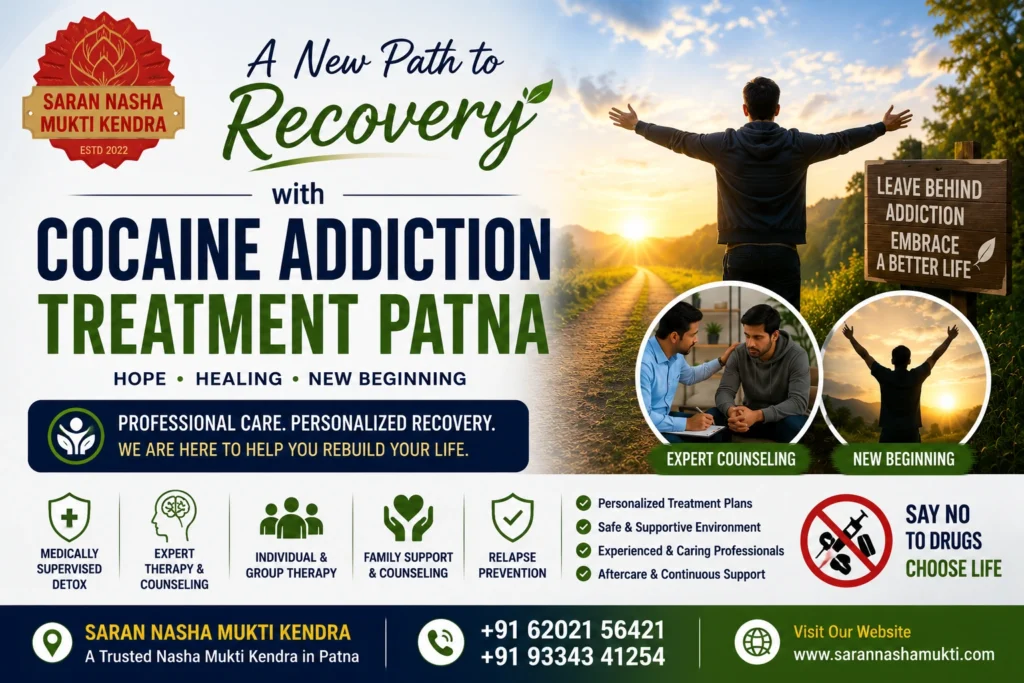
A few drug-free days isn’t recovery, not really. Cocaine Addiction Treatment Patna pulls together assessment, supportive care, psychological treatment, behavioral strategies, and support that continues well after the first phase is over.
Medical and Psychological Assessment
Treatment usually starts by understanding a person’s history with the substance, their current health, mental state, and life circumstances. This helps the team catch possible complications early and shape a plan that fits the actual person, which matters even more when someone is using more than one substance or dealing with another health issue alongside the addiction.
Supportive Withdrawal Management
Withdrawal from cocaine can bring fatigue, a much bigger appetite, disrupted sleep, irritability, low mood, restlessness, and intense cravings. WHO guidance notes that withdrawal is best managed in a supportive setting, where symptoms are watched closely and dealt with as they come up. Having professional supervision here isn’t just reassuring, it also catches anything that needs extra medical or psychological attention before it turns into a bigger problem.
Counseling and Behavioral Therapy
Counseling digs into the “why.” It helps someone work through triggers, negative thought patterns, unresolved stress, and the choices that keep the cycle spinning. Cognitive behavioral approaches, specifically, teach people to spot risky situations before they’re in trouble and respond differently. WHO guidance also backs psychosocial interventions like cognitive behavioral therapy and contingency management for people dealing with cocaine or stimulant dependence.
Family Counseling and Support
Addiction touches the whole household, not just the person using it. Family counseling opens up conversations, clears up misunderstandings, and helps relatives see dependence for what it is, a health condition that needs support, not judgment. A supportive home also makes it a lot easier for someone to stick with treatment and settle back into everyday life once it’s over.
Choosing Cocaine De Addiction Treatment in Patna for Long-Term Recovery
Choosing a rehab program is a big decision, and it deserves real thought, not a rushed choice. Families should look for individualized treatment, proper medical supervision, real counseling, a relapse prevention plan, and long-term follow-up. Skip anything promising an overnight fix.
Important Features of a Recovery Program
A solid rehabilitation program usually includes:
- Initial medical and psychological assessment
- Supportive withdrawal management
- Individual counseling
- Behavioral therapy
- Family counseling
- Trigger and craving management
- Relapse prevention planning
- Healthy lifestyle guidance
- Follow-up and aftercare support
The Best Cocaine De Addiction Treatment in Patna is the one built around a person’s actual condition, not a fixed program everyone gets pushed through. And that plan should keep changing as the person moves forward through rehabilitation.
Building a Healthy Life After Cocaine Rehabilitation
Recovery doesn’t end the day formal treatment wraps up. Stepping back into everyday life can bring old triggers, stress, and social pressure right back with it, and that can raise the risk of relapse if a person isn’t prepared.
Developing Healthy Daily Routines
Steady sleep, real meals, staying active, meaningful work, hobbies, all of this gives structure to daily life during recovery. Staying close to supportive family and positive people also helps cut down on isolation. Swapping old drug-related habits for these instead gives someone new tools for dealing with boredom, stress, and hard emotions.
Relapse Prevention and Continuing Support
Relapse prevention comes down to spotting personal triggers early and having a plan ready before cravings get overwhelming. Ongoing counseling gives people a space to check in on their progress, work through new challenges, and keep sharpening their coping skills. And if a setback happens anyway, that’s not the end of recovery. It’s just a signal to revisit the plan and reach out for support fast.
Evidence-Based Information for Cocaine Recovery
When looking into treatment options, stick to credible medical sources, not claims of a guaranteed quick fix. The World Health Organization and UNODC have both published international standards calling for effective, ethical, evidence-based approaches to treating drug use disorders. Anyone weighing their options can look into WHO guidance on psychosocial support for cocaine and stimulant use disorders before deciding anything with a qualified professional.
Conclusion
Cocaine dependence brings real challenges, but recovery is genuinely within reach with the right professional help. Cocaine Addiction Treatment Patna brings assessment, supportive withdrawal care, counseling, behavioral therapy, family involvement, and relapse prevention together under one roof, addressing every side of dependence rather than just one piece of it.
For anyone searching for the Best Cocaine De Addiction Treatment in Patna, choosing a structured, professionally guided program is a meaningful step toward better physical health, emotional stability, stronger relationships, and real confidence again. Saran Nasha Mukti Kendra offers supportive rehabilitation and personalized recovery guidance for people working toward a healthier, drug-free life at a trusted Nasha Mukti Kendra Patna.
Frequently Asked Questions
1. What is Cocaine Addiction Treatment Patna?
It’s a structured recovery process built to help people reduce or stop cocaine use while addressing the physical, psychological, and behavioral sides of dependence. It typically includes assessment, supportive care, counseling, behavioral therapy, family involvement, and aftercare.
2. What are the common signs of cocaine addiction?
Common signs include strong cravings, repeated failed attempts to quit, secrecy, changes in sleep and appetite, mood swings, money troubles, neglected responsibilities, and continued use despite obvious harm.
3. How is cocaine withdrawal managed?
Withdrawal can bring fatigue, sleep changes, a bigger appetite, irritability, low mood, restlessness, and cravings. A supportive setting with professional monitoring helps manage these symptoms and catch anything that needs extra care.
4. How long does cocaine addiction recovery take?
There’s no single timeline that fits everyone. It depends on how long and how severely someone used cocaine, their overall health, mental health, how engaged they are in treatment, and their individual progress. Continued counseling and aftercare often help after the initial rehab period ends.
5. Can someone recover from cocaine addiction?
Yes. Recovery is achievable with the right professional support, behavioral therapy, healthier lifestyle habits, and ongoing relapse prevention strategies. Since addiction can be a long-term condition for some, continued support plays a big role in staying on track.