Heroin doesn’t just harm the body. It slowly eats into everything else too: health, mood, family trust, studies, a job. If you’re reading this because someone you love is caught in it, or because it’s you, you probably already know how hard it is to stop alone. Cravings hit fast, heroin withdrawal symptoms feel brutal, and finding the right treatment for Heroin addiction in Patna can seem like a maze when you don’t know where to begin.
Here’s the good news. Recovery is possible, and it rarely depends on willpower alone. It usually takes a proper medical check, safe withdrawal care, counselling, regular follow-up and a plan for tough days. Most families start by calling a trusted heroin addiction treatment in Patna and simply asking questions. That first honest conversation is often the hardest part, and also the most useful.
What Is the Most Successful Treatment for Heroin Addiction in Patna?
Let’s be straight about this: no single method works for everybody. What helps one person may not suit another. It depends on their health, how long they’ve been using, whether they’ve tried treatment before, their mental state and what home life looks like. A qualified doctor can weigh all of that and suggest a plan that makes sense.
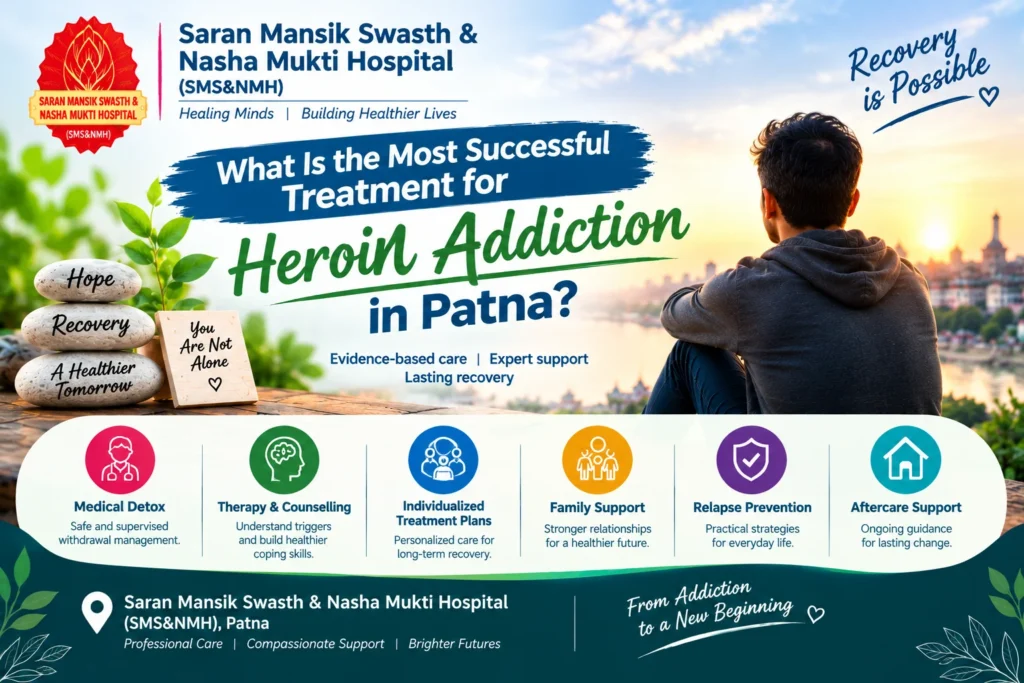
Good heroin addiction treatment usually brings several things together:
- Medical assessment: A proper look at physical and mental health before anything starts.
- Withdrawal management: Doctors watch symptoms closely and help the body through the toughest days.
- Medication-assisted treatment: Evidence-based medicines, used only under a qualified doctor and only when they fit.
- Individual counselling: A safe space to talk about triggers, stress and the feelings behind the habit.
- Family counselling: Helps relatives understand addiction without blame or shame.
- Relapse prevention: Real, practical ways to deal with cravings and risky moments.
- Aftercare support: Staying in touch with doctors and support services once the main programme ends.
None of these is magic by itself. Together, though, they give a person a much better chance of building new habits and keeping them.
Treatment for Heroin Addiction in Patna: Understanding the Recovery Process
Nobody recovers overnight. It happens in stages, and each stage deals with a different problem. Some people move quickly, others need more time, and that’s completely normal.
1. Medical Assessment and Personalised Heroin Addiction Treatment Planning
Everything begins with a private chat and check-up with a qualified healthcare professional. They’ll ask how heroin is being used, what symptoms show up, what the medical history looks like, whether anxiety or depression is involved and if any other substances are in the mix.
This step also decides what kind of care fits best: staying in a facility, visiting as an outpatient, or something in between. It matters because a person with severe dependence and someone with a lighter pattern simply don’t need the same thing.
2. Heroin Withdrawal Management and Medical Support
When heroin stops, the body protests. People often describe aching muscles, sweating, anxiety, restlessness, nausea, loose stools, sleepless nights and cravings that feel impossible to ignore. It’s miserable. And without help, plenty of people go back to using just to make it stop.
That’s where doctors come in. They check what’s going on and offer suitable care, which might mean medicine, fluids, regular monitoring and plenty of reassurance.
One thing worth knowing: detox on its own isn’t a full treatment. It clears the immediate effects of stopping, but it doesn’t touch the cravings, the emotional pain or the reasons drug use started in the first place. Treatment has to continue after it.
3. Medication-Assisted Treatment for Heroin Dependence
For many people, medicine makes a real difference in opioid addiction treatment. Buprenorphine or methadone can ease withdrawal and cravings when qualified professionals prescribe and monitor them. Naltrexone may suit some patients after they’ve been opioid-free for a suitable period.
Which medicine is right? That needs a clinical assessment. They aren’t interchangeable, and nobody should start, stop or change them without a doctor’s say.
4. Counselling and Behavioural Therapy in Heroin Addiction Treatment
Counselling helps people notice what sets off their urges: certain places, moods, friends, even particular thoughts. It also builds everyday skills such as handling stress, riding out cravings, talking things through and making better choices.
Depending on the person, this could mean cognitive behavioural therapy, motivational sessions, one-to-one talks or group support. When family joins in, home often becomes a calmer and kinder place to heal.
Best Heroin Addiction Treatment Patna: What Should You Look For?
Don’t pick a Heroin Addiction Treatment Patna just because the advertisement looks good or the promises sound big. Look for real professional care, clear answers and a plan built around the patient, not a one-size-fits-all package.
Before you decide on a drug rehabilitation centre in Patna, keep these questions in mind:
- Qualified medical supervision: Who does the assessments, and who handles complications during withdrawal?
- Individualised treatment plans: Is each patient evaluated, or does everyone get the same routine?
- Counselling and psychological support: Are feelings and behaviour looked after, not just the body?
- Safe and respectful care: Will the patient be treated with dignity and privacy?
- Family guidance: Do relatives get education and counselling too?
- Aftercare planning: What happens once the patient goes home?
- Transparent fees and services: Are costs, facilities and extra charges explained before admission?
If you’re comparing the best heroin de addiction treatment in Patna, ask these things out loud. Ask about medical supervision, therapies, emergency arrangements and follow-up. A good centre won’t mind.
Heroin Addiction Treatment Patna: Why Relapse Prevention Matters
Relapse can happen, and it’s more common than people admit. It doesn’t mean treatment has failed forever. Often it just says the plan needs another look, or that the person needs a bit more support.
Practical Ways to Reduce Relapse Risk After Heroin Addiction Treatment
A solid relapse-prevention plan might include:
- Spotting the people, places and situations connected with heroin use.
- Learning how to ride out cravings and manage stress.
- Sleeping regularly, eating balanced meals and staying active.
- Going to counseling and keeping follow-up appointments.
- Building a support circle you can really count on.
- Reaching out to a professional early if cravings or warning signs creep back.
And please remember this one. After a break from heroin, the body’s tolerance drops. Using the same amount as before can cause a life-threatening overdose. If someone returns to use, take it seriously, and call for emergency medical help right away if you suspect an overdose.
How Family Support Helps During Heroin Addiction Recovery
Addiction hurts the whole household. Parents, partners, brothers, sisters and children can all feel angry, scared or let down. Families can’t control another person’s recovery, but they can make it easier to ask for help.
A few things that tend to help:
- Talk calmly, without insults or threats.
- Encourage a professional assessment and treatment.
- Set boundaries that are clear and fair.
- Support appointments and healthy daily routines.
- Skip the blame when talking about the past.
- Think about family counseling if conversations keep turning into arguments.
Being kind doesn’t mean looking the other way. It means holding firm boundaries and still offering real support, while nudging the person toward professional care.
Why Consider Saran Nasha Mukti Kendra in Patna?
If you’re searching for a Nasha mukti kendra Patna, choose one that explains how it works in plain language and respects each patient’s situation. Before deciding, ask about medical assessments, trained staff, counselling, withdrawal support, privacy, costs and what happens after discharge.
At Saran Nasha Mukti Kendra, patients and families can ask about the recovery services available and talk through which options may suit them. It’s wise to confirm treatment arrangements directly, especially if medical supervision, medication or emergency care is needed.
You can also read this detailed guide to Heroin Addiction Treatment to understand your options and why ongoing support counts. For general facts on drugs and health, the World Health Organization offers useful information on psychoactive substances.
Conclusion
The most successful treatment for Heroin addiction in Patna looks after the mind as well as the body. Medical guidance, the right medicine when it’s needed, counselling, a supportive family and steady follow-up all work together toward lasting heroin addiction recovery. If you or someone close to you is struggling, don’t wait for a worse day. Ask for a professional assessment, talk through your options and take that first step. It usually feels lighter once it’s taken.
Frequently Asked Questions
1. What is the most effective treatment for heroin addiction?
It’s usually a mix: a medical check, withdrawal care, medicine when it’s suitable, counselling and long-term follow-up. The right combination depends on the person.
2. Can heroin addiction be treated completely?
Many people recover well and stay in recovery with ongoing treatment and support. Since addiction can be a long-term, relapsing condition, continued care is often needed.
3. How long does heroin addiction treatment take?
There’s no fixed timeline. Withdrawal care may take several days or longer, and structured treatment and support can go on for months or more, depending on the person.
4. Is heroin withdrawal dangerous?
It’s often extremely uncomfortable and can lead to complications, especially if other health problems or substances are involved. A medical assessment helps find the safest way forward.
5. Can heroin addiction be treated without medication?
Some plans rely mostly on counselling and behavioural support, but medicine can be an important, evidence-based option for opioid use disorder. A qualified professional should explain the benefits and risks of each route.