Table of Contents
ToggleNobody plans to get hooked on cocaine. It usually starts small, maybe at a party or during a stressful phase, and then one day the cravings show up on their own. Sleep goes. Anxiety grows. Work, money, and family all start to suffer. If you’re reading this because someone you love is in that spot, take a breath. You’ve already taken the hardest step, which is looking for answers. Cocaine de-addiction Patna begins with a simple question: what does this particular person need to get better?
Here’s something worth knowing early. There’s no magic therapy that fits everyone. Good cocaine addiction treatment mixes a few things together, such as counselling, behavioural therapy, a medical check-up, family involvement, and a plan to stay clean afterwards. How much of each depends on how long the person has been using, how they feel mentally, what their body is going through, and what they hope to achieve.
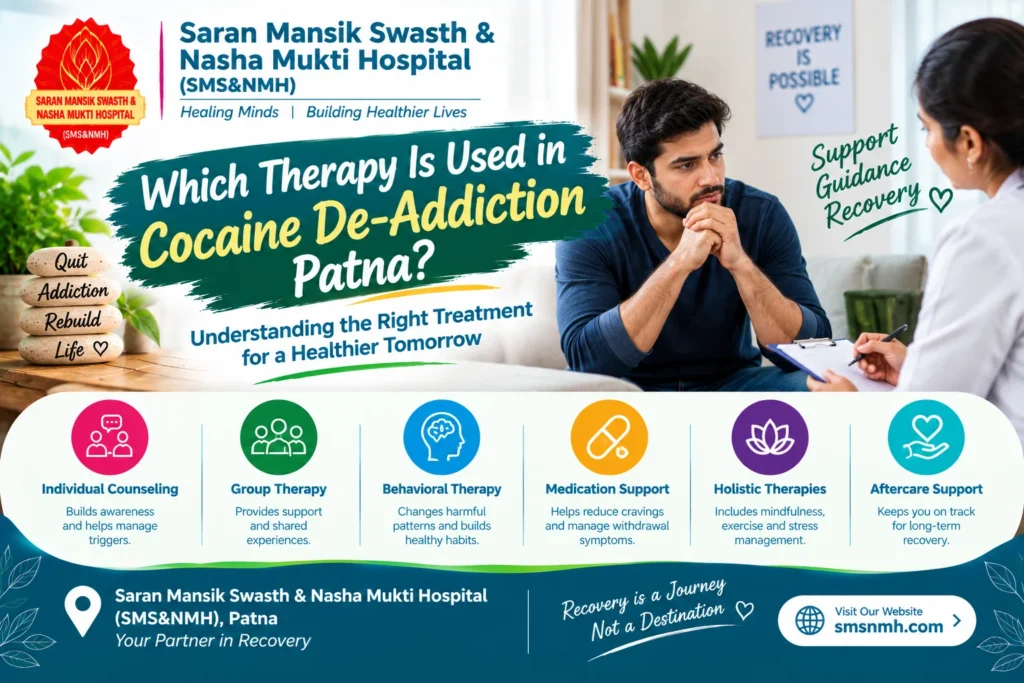
Which Therapy Is Used in Cocaine De-Addiction Patna?
So which therapies do doctors and counsellors actually use? Quite a few, and they’ve all been studied. Together they help a person understand why they use, tame the cravings, cope with stress in better ways, and avoid slipping back.
You’ll usually hear about these:
- Cognitive behavioural therapy (CBT)
- Contingency management
- Motivational interviewing
- Individual counselling
- Group therapy and family counselling
- Medical and psychiatric assessment, when it’s needed
A trained professional can work out which ones suit your case. And no, therapy isn’t someone lecturing you to “just stop.” It’s more like learning a new toolkit, so ordinary bad days don’t end with the drug.
Cocaine De-Addiction Therapy: Understanding the Main Treatment Methods
1. Cognitive Behavioural Therapy for Cocaine Addiction
CBT is a go-to treatment for substance use disorder, and for good reason. It shows people how their thoughts, feelings, and surroundings feed into what they do.
Think about someone who craves cocaine every time a deadline looms, or when they’re lonely on a Sunday night, or when they bump into the old group. CBT helps them see those triggers clearly. Then they practise what to do instead.
Along the way, a person may learn to:
- Catch the thoughts that nudge them toward using.
- Spot risky situations early, before things spiral.
- Handle cocaine cravings with simple, practical tricks.
- Manage stress and tough emotions without the drug.
- Replace old habits with healthier ones.
It doesn’t happen overnight. Still, each skill adds up, and decisions that once felt impossible start to feel manageable.
2. Contingency Management and Positive Reinforcement
This one is pretty straightforward. Contingency management rewards progress. In a structured programme, a person might earn small, suitable incentives for showing up to sessions or reaching goals they agreed on. Good habits feel worth the effort, so people stay with treatment.
But it isn’t a stand-alone fix. It works best as one part of a full plan, alongside counselling and proper medical care.
3. Motivational Interviewing for Cocaine De-Addiction
Plenty of people say, “I know cocaine is wrecking my life, but I’m not sure I can stop.” That mix of fear and doubt is normal. They might dread withdrawal symptoms, worry about losing friends, or wonder how they’ll cope with stress alone.
Motivational interviewing gives them space to talk about all of it without feeling judged. The therapist doesn’t push. Instead, they help the person find their own reasons to change and set goals that feel realistic. It’s particularly useful for someone who resists treatment or has quit therapy before. After all, change sticks when it matters to the person making it.
Cocaine Addiction Treatment Patna: What Does the Recovery Process Include?
Therapy matters a lot, yet recovery usually has more moving parts. Effective Cocaine Addiction Treatment Patna should fit the person’s health, emotional needs, and home life, helping them build healthier habits and work toward lasting recovery.
Medical Assessment and Initial Support
It starts with a doctor looking at the whole picture: how much cocaine the person uses, their symptoms, medical history, sleep, and mental health. This helps catch problems early and shows what level of care makes sense.
Cocaine can affect the heart rate, blood pressure, mood, and sleep. After stopping, many people feel drained, low, or anxious, and the cravings can hit hard. Medical supervision helps spot warning signs and shows whether more treatment is needed.
Psychological Counselling and Behavioural Support
Once the assessment is done, the focus shifts to triggers, handling emotions, and rebuilding a steady daily routine. One-to-one counselling gives a person a private space to open up. Group sessions add something different, because hearing from people who’ve been through the same thing can make you feel less alone.
If depression or anxiety is also in the picture, it needs care too. Ignore it, and cocaine relapse becomes much more likely.
Relapse Prevention and Continuing Care
Here’s a common misunderstanding. Recovery doesn’t wrap up the day someone stops using. Ongoing support helps them prepare for rough patches and notice warning signs early.
A good relapse prevention plan often includes regular counselling, a supportive home, structured days, decent sleep, and follow-up visits. And if a slip does happen? Review the plan quickly. One setback doesn’t mean the effort was wasted.
Best Cocaine De Addiction Treatment in Patna: Comparing Therapy Options
The table below gives a quick overview of common approaches. Keep in mind that what helps one person may not help another.
| Therapy or support | Main purpose | Potential benefit |
| Cognitive behavioural therapy | Find triggers and change harmful thought patterns | Builds coping and decision-making skills |
| Contingency management | Reward treatment goals and positive habits | Keeps the person engaged in recovery |
| Motivational interviewing | Explore readiness for change | Supports treatment participation |
| Individual counselling | Address personal and emotional concerns | Offers personal guidance |
| Family counselling | Improve communication and support | Creates a healthier home environment |
| Medical assessment | Check physical and mental health | Finds complications and extra care needs |
When you’re weighing up the best cocaine de addiction treatment in Patna, a few plain questions go a long way. Are the professionals qualified? Will the counselling be tailored to the person? Is there a real medical assessment, strict privacy, and follow-up care? And be careful with anyone who promises a guaranteed cure or says one method works for all.
How Family Support Helps During Cocaine Recovery
Cocaine problems rarely stay with one person. Relatives often feel angry, scared, or stuck, unsure whether to confront their loved one or give them room. A caring approach can nudge someone toward treatment without pretending the harm isn’t real.
Families can help by:
- Talking calmly and skipping the shaming words.
- Encouraging a professional assessment.
- Backing appointments and healthy routines.
- Setting clear, fair boundaries.
- Joining family counselling when it’s suggested.
- Getting help fast if worrying symptoms appear.
One more thing, and it’s important. Cocaine can sometimes cause severe agitation, chest pain, overheating, or seizures. These are medical emergencies, so call for urgent help right away. Counselling alone can’t handle them.
Choosing a Nasha Mukti Kendra Patna for Cocaine Recovery
Searching for a nasha mukti kendra Patna can feel overwhelming, so go slowly and look closely at what’s really on offer. Ask about the team’s qualifications, medical supervision, counselling methods, emergency arrangements, privacy rules, costs, and aftercare.
You can contact Saran Nasha Mukti Kendra to learn about the initial assessment and available recovery support. Before choosing a treatment programme, confirm the services offered, the qualifications of the care team, and whether medical or psychiatric supervision is available if needed.
Want to dig deeper? Have a look at our What Is Cocaine De-Addiction Patna? Complete Guide. You can also browse the World Health Organization’s page on psychoactive drugs to see how they affect health.
Conclusion
Beating cocaine takes more than putting the drug down. It means understanding your triggers, building healthier ways to cope, looking after your mental health, and keeping support close for the long haul. With the right therapy, counselling, medical care, and relapse prevention, real progress is possible. Reaching out early gives families a clearer picture of their choices and a bit more confidence for what comes next. If you’re ready to start cocaine de-addiction Patna, a professional assessment is a solid first move.
Frequently Asked Questions
1. Which therapy is best for cocaine addiction?
CBT and contingency management are the most researched options for cocaine addiction. The right mix depends on your habits, health, and what you want from recovery.
2. Can cocaine addiction be treated without medication?
Yes. Therapy is the core of treatment, since no standard medicine is approved for cocaine use disorder. A doctor can still help with sleep, anxiety, or low mood.
3. How long does cocaine de-addiction treatment take?
There’s no fixed timeline. Some people need a few weeks of structured care, while others need counseling and follow-up for months. Plans get reviewed regularly.
4. What are the common symptoms after stopping cocaine?
Many people feel tired, low, anxious, or sleepless, with strong cravings and a bigger appetite. Severe sadness or thoughts of self-harm need urgent medical help.
5. Can family members help someone recover from cocaine addiction?
Yes. Families can encourage treatment, keep routines healthy, join counselling, and set fair boundaries, while also taking care of their own emotional health.