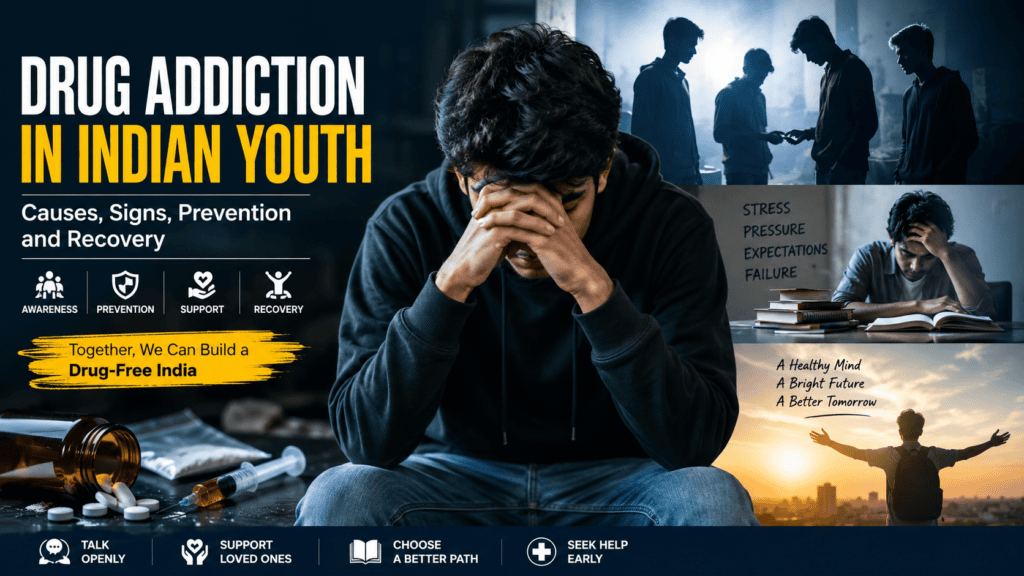
A question they never expected to ask: is my child using drugs? The answer, for a growing number, is yes. Drug addiction in Indian youth is no longer a problem limited to big cities or troubled homes. It touches school-goers, college students, and young professionals across the country, regardless of background.
This isn’t a story about bad choices or weak character. It’s a public health issue with real causes, real warning signs, and real solutions. If you’re a parent, a sibling, or a young person reading this because something feels off, you’re in the right place. Let’s walk through what’s actually happening, why it’s happening, and what you can do about it.
How Big Is the Drug Addiction Problem Among Indian Youth?
Drug addiction in Indian youth has grown into one of the country’s most pressing health concerns. According to the National Survey on Extent and Pattern of Substance Use in India (2025), conducted by the Ministry of Social Justice and Empowerment with AIIMS Delhi’s National Drug Dependence Treatment Centre, around 180 million people in India use alcohol, and a notable share show signs of dependence. Cannabis, opioids, and sedative misuse also show a consistent pattern: usage is highest among people between 18 and 25 years old.
What the National Survey on Substance Use Says
The survey found that early adolescence, roughly between 12 and 17 years, is the riskiest window for a young person to try a substance for the first time. Once that first use happens young, the chances of it turning into regular use go up sharply. [Statistic Placeholder: insert latest verified percentage of youth substance use from most recent government report]
Which States and Cities Are Most Affected
Uttar Pradesh, Punjab, and Maharashtra have reported the highest number of drug-related cases in recent years. Cannabis use runs high in Punjab, Sikkim, and Delhi, while opioid use is more common in the northeastern states. Bihar, including cities like Patna, has also seen a steady rise in cases, particularly involving alcohol, tobacco, and, increasingly, synthetic substances among college-going youth.
Quick Stat Box:
- Youth aged 18-25 show the highest rates of substance use in India
- Alcohol and tobacco remain the most common entry-point substances
- Cannabis use is rising fastest among urban college students
Why Are So Many Young Indians Turning to Drugs?
Understanding why drug addiction in Indian youth keeps climbing means looking past the surface. It’s rarely one single reason. It’s usually a mix of pressure, curiosity, and a lack of healthy outlets.
Peer Pressure and the Need to Fit In
Friends introduce most young people to their first cigarette, drink, or joint. Wanting to belong is a basic human need, and for teenagers especially, fitting in with a group can matter more than any warning about long-term risk.
Academic Stress and Mental Health Struggles
India’s academic culture puts enormous weight on marks, ranks, and competitive exams. Many young people turn to substances to cope with anxiety, sleeplessness, or the fear of disappointing their families. Depression and stress often sit quietly behind substance use, even when nobody names them out loud.
Easy Access and Low Awareness Among Families
Tobacco and alcohol are easy to buy in most parts of India, and many parents simply don’t know what to look for. Prescription drugs, too, are often available without proper checks, making misuse easier than most families realise.
Social Media, Nightlife Culture, and Curiosity
Social media has normalised drug references in music, memes, and influencer content. Add to that a growing nightlife culture in metro cities, and curiosity turns into experimentation far more easily than it did a generation ago.
Family History and Early Exposure
A young person growing up around substance use at home, even if it’s just heavy drinking, is statistically more likely to use substances themselves. Early exposure shapes what feels “normal.”
Which Drugs Are Most Common Among Indian Youth?
Tobacco and Alcohol as Entry Points
These two remain the most common starting substances, often tried well before the legal age, and frequently seen as harmless by families until use becomes regular.
Cannabis and Its Growing Normalisation
Cannabis use has grown steadily, helped along by casual references in pop culture and social media that downplay its risks.
Synthetic Drugs in Urban Areas
MDMA, LSD, and other designer drugs are increasingly reported in nightlife settings in metro and semi-metro cities, often among college students and young professionals.
Prescription Drug Misuse Among Students
Painkillers and sedatives, sometimes taken to manage exam stress or sleep issues, are being misused more frequently, and they’re often easier to access than illegal drugs.
What Are the Warning Signs of Drug Addiction in a Young Person?
Recognising the signs early makes a real difference in how quickly a young person gets help. Drug addiction in Indian youth rarely appears overnight. It builds gradually, and the signs are usually there before a family notices.
Physical and Behavioural Changes to Watch For
- Sudden weight loss or unusual sleep patterns
- Bloodshot eyes or frequent unexplained illness
- Poor personal hygiene or neglect of appearance
Changes in Friend Circles and Habits
A young person pulling away from old friends, becoming secretive about where they’re going, or suddenly needing more money without explanation are common red flags.
Emotional and Academic Warning Signs
Mood swings, irritability, falling grades, and loss of interest in things they once enjoyed often show up well before a family suspects substance use.
Quick Checklist:
- Withdrawal from family and old friends
- Unexplained financial demands
- Falling academic or work performance
- Sudden changes in mood or sleep
How Does Drug Addiction Affect a Young Person’s Life?
Impact on Physical and Mental Health
Long-term use damages the liver, heart, and lungs, and it worsens anxiety and depression rather than relieving it, despite how it might feel in the moment.
Impact on Education and Career
Concentration and memory suffer, attendance drops, and many young people fall behind academically or lose job opportunities as a direct result of ongoing substance use.
Impact on Family Relationships
Trust breaks down. Parents feel helpless, siblings feel neglected, and the emotional distance in the home often grows faster than anyone realises until it’s addressed directly.
What Should Parents Do If They Suspect Drug Use?
How to Start the Conversation Without Blame
Choose a calm moment, not a confrontation right after an argument. Lead with concern, not accusation: “I’ve noticed you seem different lately, and I want to understand what’s going on” works far better than “I know you’re using drugs.”
When to Seek Professional Help
If the signs are consistent over weeks, not just a one-off, it’s time to involve a counsellor or de-addiction specialist. Waiting for things to “sort themselves out” usually allows the problem to deepen.
Common Mistakes Parents Make
Shouting, threatening, or involving the whole extended family at once often pushes a young person further into secrecy. Shame rarely motivates recovery. Support does.
Is Recovery From Drug Addiction Possible?
Yes. Recovery from drug addiction in Indian youth is absolutely possible, especially when treatment starts early and includes both the young person and their family.
What a Structured De-Addiction Program Looks Like
A good program usually includes medical detox where needed, individual counselling, group therapy, and life-skills training to help the young person cope with stress without turning to substances.
The Role of Counselling and Family Support
Recovery isn’t just about stopping drug use. It’s about rebuilding trust, understanding the root cause, whether that’s stress, peer pressure, or an underlying mental health struggle, and building healthier coping habits.
Life After Rehab: Preventing Relapse
Follow-up counselling, staying connected to supportive people, and having a clear plan for stressful moments all lower the chances of relapse significantly.
How Saran Nasha Mukti Kendra Helps Young People Recover
Our Approach to Youth Addiction Treatment
At Saran Nasha Mukti Kendra in Patna, we treat young people with the same care and privacy we’d want for our own families. Our approach combines medical support, counselling, and family involvement, without judgment and without shame.
Why Families in Bihar Trust Us
We understand that reaching out for help is hard, especially in communities where addiction still carries stigma. Our team works closely with both the young person and their family throughout the recovery process, so nobody has to handle it alone.
How to Reach Out for Help
If you’re worried about a young person in your life, a conversation with our counsellors costs nothing but a phone call, and it could be the first real step toward getting them back on track.
Frequently Asked Questions (FAQ)
1. What is the main cause of drug addiction in Indian youth?
There’s rarely just one cause. Peer pressure, academic stress, easy access to substances, and gaps in family awareness usually combine to push a young person toward first use.
2. How many young people in India use drugs?
According to the 2019 national survey by the Ministry of Social Justice and Empowerment, substance use is highest among people aged 18-25, with alcohol, tobacco, and cannabis being the most reported substances.
3. What age group is most at risk of drug addiction?
Research consistently points to the 15-25 age range as the highest-risk window, with many people trying a substance for the first time in their early teenage years.
4. Can a drug addiction be cured completely?
Addiction is treatable and manageable with the right program. Recovery is an ongoing process rather than a one-time fix, but a full, stable recovery is achievable with consistent support.
5. How do I convince my child to go to rehab?
Avoid confrontation. Speak from concern, involve a counsellor early, and let the young person know they’re supported, not being punished.
Q6: Where can I find a good de-addiction center in Bihar?
Saran Nasha Mukti Kendra in Patna offers confidential, structured treatment for young people, along with guidance and support for their families throughout the process.
Q7: Is drug addiction treatment confidential?
Yes. Privacy is a priority at every stage, from the first consultation through to ongoing counselling, since confidentiality is often what allows families to seek help without fear of judgment.
Key Takeaways
- Drug addiction in Indian youth is rising, driven by peer pressure, academic stress, and easy access to substances.
- Tobacco, alcohol, and cannabis remain the most common starting points, with synthetic drug use growing in urban areas.
- Early warning signs include behavioural changes, falling grades, and withdrawal from family and old friends.
- Recovery is possible with timely intervention, professional counselling, and consistent family support.
- Saran Nasha Mukti Kendra in Patna offers confidential, compassionate treatment for young people and guidance for their families.
If you recognise any of these signs in someone you love, reaching out early matters more than having every answer right now. Call Saran Nasha Mukti Kendra, Patna, for a confidential conversation about the next step.
This article is for informational purposes only and does not replace professional medical advice. If you or someone you know needs help with substance use, please consult a qualified healthcare professional or de-addiction specialist.